El Libro del Día: 2016-08-08
Titulo: Professional AngularJS
Autor: Valeri Karpov, Diego Netto
Editorial: Wrox
Nro Paginas: 399
Capítulos:
CHAPTER 1 Building a Simple AngularJS Application
CHAPTER 2 Intelligent Workflow and Build Tools
CHAPTER 3 Architecture
CHAPTER 4 Data Binding
CHAPTER 5 Directives
CHAPTER 6 Templates, Location, and Routing
CHAPTER 7 Services, Factories, and Providers
CHAPTER 8 Server Communication
CHAPTER 9 Testing and Debugging AngularJS Applications
CHAPTER 10 Moving On
APPENDIX Resources
Descarga:
Professional_AngularJS
Blog de Luis Dueñas dedicado a la difusión del Desarrollo en Microsoft .NET, Visual Studio, WinForms, WebForms, MVC, ASP .NET, jQuery, AJAX, HTML5, JavaScript, Móviles, etc. Encontrarás Libros, Demos, Artículos Técnicos, Entrenamiento.
Mostrando las entradas con la etiqueta Testing. Mostrar todas las entradas
lunes, 8 de agosto de 2016
El Libro del Día: Professional AngularJS
Etiquetas:
AngularJS,
Apps,
Architecture,
Build Tools,
Data Binding,
Debugging,
Diego Netto,
Directives,
Factories,
Libros,
Location,
Professional,
Providers,
Routing,
Services,
Templates,
Testing,
Valeri Karpov,
Workflow,
Wrox
miércoles, 13 de julio de 2016
Artículo - JavaScript Developer
JavaScript Developer
1. Introducción
JavaScript es un Lenguaje de Programación interpretado desarrollado por Brendan Eich en 1995 cuando trabajaba en Netscape. JavaScript es orientado a objetos, basado en prototipos, débilmente tipado y dinámico. La especificación de este lenguaje se denomina ECMAScript y es elaborada por ECMA International.
Actualmente es uno de los Lenguajes de Programación mas usados en el mundo, ya que sirve para crear aplicaciones web, tanto de lado del cliente (desde sus inicios) y también de lado del servidor (en la actualidad).
En los 20 años de vida que tiene JavaScript, en los 10 primeros años solo se usaba para validaciones y manejo de controles, pero a partir de la incorporación de AJAX (2005), la creación de librerías como jQuery (2006), la creación de JavaScript en el servidor con NodeJS (2009), la aparición de las nuevas APIs sobre todo de HTML5 y la nueva especificación del lenguaje ECMAScript6 (2012), ha originado que JavaScript tenga un crecimiento exponencial.
Muchos desarrolladores escribían la mayor parte del código en el servidor, ya que los Frameworks de ese lado tenían una gran cantidad de APIs o Librerías que permitían realizar cualquier tipo de tareas, desde acceso a datos hasta gráficos, operaciones con datos, manejo de archivos, etc. Es por eso que se usaba mucho código en PHP, Java o .NET, ysolo un mínimo de código en JavaScript para validar, manejar el DOM y mejorar el formato o estilo.
Actualmente, todo lo que podíamos hacer en el servidor, lo podemos hacer en el cliente con JavaScript, desde hacer llamadas asíncronas con XHR o AJAX hasta manipular los datos, crear gráficos (en 2D y en 3D), cifrar datos, enviar y recibir notificaciones en tiempo real, etc. Esto se puede hacer nativamente usando las APIs de JavaScript o usando una Librería o Framework que encapsule dicho trabajo.
Nota: Antes yo escribía 80% de código en el servidor y 20% en el cliente, pero desde hace unos años escribo 20% de código en el servidor y 80% en el cliente usando JavaScript puro. Estos porcentajes concuerdan con "El Problema de la Performance" que se da 80% en el cliente y 20% en el servidor.
Muchos programadores creen conocer JavaScript, pero en realidad no conocen ni el 10% de lo que tiene. El propósito de este artículo es contribuir a aumentar ese conocimiento, mostrando la Historia, las APIs, las Librerías, los Frameworks, las Herramientas y las fuentes donde pueden aprender más sobre este lenguaje, para cambiar su forma de programar y usar "La Web como Plataforma de Desarrollo" a través del Navegador (Browser) usando como lenguaje "JavaScript".
2. Cronología de JavaScript (20 años)
- 1995: En Mayo Brendan Eich crea Mocha en 10 días
- 1995: En Setiembre se crea LiveScript
- 1995: En Diciembre cambia de nombre a JavaScript
- 1996: Microsoft crea JScript
- 1996: DHTML
- 1997: ECMA-262 Ed1 (ES1)
- 1998: DOM Level 1
- 1999: ES3 (Base JavaScript actual)
- 1999: Microsoft crea XmlHttpRequest (Pre-AJAX)
- 2000: DOM Level 2
- 2001: Douglas Crockford crea JSON
- 2004: DOM Level 3
- 2005: AJAX
- 2008: ECMAScript 4 (ES4)
- 2009: ECMAScript 5 (ES5). JSON, Object.create
- 2012: ECMAScript 6 (ES6). Modulos, Proxys
- 2012: Navigation Timing
- 2012: HTML5 Web Messaging
- 2012: Web Workers
- 2012: WebSocket
- 2013: Web Storage
- 2013: Touch Events
- 2013: Geolocation API
- 2013: Performance Timeline
- 2013: Web Notifications
- 2013: File API
- 2013: Messaging API
- 2013: Web Telephony API
- 2013: MediaStream Image Capture
- 2013: WebRTC 1.0
- 2013: Web Audio API
- 2014: Progress Events
- 2014: Indexed Database
- 2014: Server Sent Events (SSE)
- 2014: Web Cryptography API
- 2014: Web NFC API
- 2014: XMLHttpRequest Level 1
- 2014: Push API
- 2014: Streams API
- 2014: Screen Orientation API
- 2014: Service Workers
- 2014: TCP and UDP Socket API
- 2014: URL
- 2014: Clipboard API and Events
- 2015: ECMA-262 (6th Edition). ECMAScript 2015 Language Specification
3. APIs de JavaScript
- Document Object Model (DOM)
-) HTML: Document, Element, Event, HTML..., Node, NodeList, ParentNode, etc.
-) XML: XMLDocument.
-) SVG: Scalable Vector Graphics
- Gráficos
-) Canvas: CanvasGradient, CanvasRenderingContext2D, HTMLCanvasElement, ImageData.
-) SVG: SVGAnimate, SVGAnimated, SVGColor, SVGElement, SGVFont, SVGPath, SVGText.
-) WebGL: WebGLBuffer, WebGLObject, WebGLRenderbuffer, WebGLRenderingContext, etc.
- Almacenamiento
-) File API: Blob, File, FileList, FileReader, FileReaderSync, URL.
-) IndexedDB: IDBCursor, IDBDataBase, IDBFactory, IDBIndex, IDBObjectStore, etc.
-) Web Storage: Storage, StorageEvent, WindowLocalStorage, WindowSessionStorage.
- Conectividad
-) Web Sockets: BroadcastChannel, CloseEvent, EventSource, PortCollection, WebSocket.
-) Messaging: MessageChannel, MessageEvent, MessagePort.
-) WebRTC: RTCPeerConnection, RTCIceServer, RTCIceCandidate, RTCDataChannel, etc.
- Acceso:
-) Drag And Drop (D&D): DataTransfer, DataTransferItem, DataTransferItemList, DragEvent.
-) FullScreen: Document (fullscreenElement, fullscreenEnabled), Element (requestFullscreen).
- Estilos
-) CSS Object Model: CSS, CSSRule, CSSStyleSheet, MediaList, StyleSheet, etc.
-) Selectors: Document (querySelector, querySelectorAll), DocumentFragment, Element.
- Multimedia
-) Animation Timing: Window (cancelAnimationFrame, requestAnimationFrame).
-) Media: AudioTrack, HTMLMediaElement, HTMLTrackElement, MediaController, VideoTrack.
-) Pointer Lock: Document (exitPointerLock), Element (requestPointerLock), MouseEvent.
-) Web Audio: AnalyserNode, AudioBuffer, AudioListener, AudioParam, DelayNode, GainNode.
- Performance
-) Browser: History, ImageBitmap, Location, MimeType, Navigator, WindowBase64 (atob, btoa),
WindowTimers (clearInterval, clearTimeout, setInterval, setTimeout), etc.
-) Typed Arrays: ArrayBuffer, ArrayBufferView, DataView, Float..Array, Int..Array, Uint..Array.
-) Web Workers: AbstractWorker, SharedWorker, Worker, WorkerLocation, WorkerNavigator, etc.
- Componentes Web
-) Shadow DOM: CSSHostRule, CSSRule, Element (createShadowRoot), ShadowRoot, etc.
-) Custom Elements: Element (customElements.define)
-) HTML Imports: HTMLLinkElement (rel=import), Document (write, close).
- ECMAScript
-) Tipos de Datos Primitivos: Boolean, Null, Undefined, Number, String, Symbol (ES6).
-) Tipos Objetos: Array, Date, Error, Function, Global, JSON, Math, Object, RegExp.
-) Colección de Claves (Objetos): Maps, Sets, WeakMaps, WeakSets.
- Seguridad Web (WebCryptography)
-) Clases: Crypto, Algorithm, KeyAlgorithm, CryptoKey, SubtleCrypto, etc.
-) Operaciones: encrypt, decrypt, sign, verify, deriveBits, wrapKey, unwrapKey,
generateKey, importKey, exportKey, getLength.
-) Algoritmos: RSASSA-PKCS1-v1_5, RSA-PSS, RSA-OAEP, ECDSA, ECDH, AES-CBC,
HMAC, DH, SHA-1, SHA-256, SHA-384, SHA-512, CONCAT, HKDF-CTR, PBKDF2, etc.
- Comunicación Asíncrona con el Servidor:
-) Cliente al Servidor: XmlHttpRequest (XHR)
-) Servidor al Cliente: Server-Send Events (SSE)
-) Bidireccional: Web Sockets
6.7. Documentación Oficial
- W3C
- ECMAScript
- HTML5 Org
- Guía de Internet Explorer 11 para desarrolladores (Microsoft)
- Mozilla Developer Network (MDN)
- HTML5 Rocks (Google)
- W3Schools.com
1. Introducción
JavaScript es un Lenguaje de Programación interpretado desarrollado por Brendan Eich en 1995 cuando trabajaba en Netscape. JavaScript es orientado a objetos, basado en prototipos, débilmente tipado y dinámico. La especificación de este lenguaje se denomina ECMAScript y es elaborada por ECMA International.
Actualmente es uno de los Lenguajes de Programación mas usados en el mundo, ya que sirve para crear aplicaciones web, tanto de lado del cliente (desde sus inicios) y también de lado del servidor (en la actualidad).
En los 20 años de vida que tiene JavaScript, en los 10 primeros años solo se usaba para validaciones y manejo de controles, pero a partir de la incorporación de AJAX (2005), la creación de librerías como jQuery (2006), la creación de JavaScript en el servidor con NodeJS (2009), la aparición de las nuevas APIs sobre todo de HTML5 y la nueva especificación del lenguaje ECMAScript6 (2012), ha originado que JavaScript tenga un crecimiento exponencial.
Muchos desarrolladores escribían la mayor parte del código en el servidor, ya que los Frameworks de ese lado tenían una gran cantidad de APIs o Librerías que permitían realizar cualquier tipo de tareas, desde acceso a datos hasta gráficos, operaciones con datos, manejo de archivos, etc. Es por eso que se usaba mucho código en PHP, Java o .NET, ysolo un mínimo de código en JavaScript para validar, manejar el DOM y mejorar el formato o estilo.
Actualmente, todo lo que podíamos hacer en el servidor, lo podemos hacer en el cliente con JavaScript, desde hacer llamadas asíncronas con XHR o AJAX hasta manipular los datos, crear gráficos (en 2D y en 3D), cifrar datos, enviar y recibir notificaciones en tiempo real, etc. Esto se puede hacer nativamente usando las APIs de JavaScript o usando una Librería o Framework que encapsule dicho trabajo.
Nota: Antes yo escribía 80% de código en el servidor y 20% en el cliente, pero desde hace unos años escribo 20% de código en el servidor y 80% en el cliente usando JavaScript puro. Estos porcentajes concuerdan con "El Problema de la Performance" que se da 80% en el cliente y 20% en el servidor.
Muchos programadores creen conocer JavaScript, pero en realidad no conocen ni el 10% de lo que tiene. El propósito de este artículo es contribuir a aumentar ese conocimiento, mostrando la Historia, las APIs, las Librerías, los Frameworks, las Herramientas y las fuentes donde pueden aprender más sobre este lenguaje, para cambiar su forma de programar y usar "La Web como Plataforma de Desarrollo" a través del Navegador (Browser) usando como lenguaje "JavaScript".
2. Cronología de JavaScript (20 años)
- 1995: En Mayo Brendan Eich crea Mocha en 10 días
- 1995: En Setiembre se crea LiveScript
- 1995: En Diciembre cambia de nombre a JavaScript
- 1996: Microsoft crea JScript
- 1996: DHTML
- 1997: ECMA-262 Ed1 (ES1)
- 1998: DOM Level 1
- 1999: ES3 (Base JavaScript actual)
- 1999: Microsoft crea XmlHttpRequest (Pre-AJAX)
- 2000: DOM Level 2
- 2001: Douglas Crockford crea JSON
- 2004: DOM Level 3
- 2005: AJAX
- 2008: ECMAScript 4 (ES4)
- 2009: ECMAScript 5 (ES5). JSON, Object.create
- 2012: ECMAScript 6 (ES6). Modulos, Proxys
- 2012: Navigation Timing
- 2012: HTML5 Web Messaging
- 2012: Web Workers
- 2012: WebSocket
- 2013: Web Storage
- 2013: Touch Events
- 2013: Geolocation API
- 2013: Performance Timeline
- 2013: Web Notifications
- 2013: File API
- 2013: Messaging API
- 2013: Web Telephony API
- 2013: MediaStream Image Capture
- 2013: WebRTC 1.0
- 2013: Web Audio API
- 2014: Progress Events
- 2014: Indexed Database
- 2014: Server Sent Events (SSE)
- 2014: Web Cryptography API
- 2014: Web NFC API
- 2014: XMLHttpRequest Level 1
- 2014: Push API
- 2014: Streams API
- 2014: Screen Orientation API
- 2014: Service Workers
- 2014: TCP and UDP Socket API
- 2014: URL
- 2014: Clipboard API and Events
- 2015: ECMA-262 (6th Edition). ECMAScript 2015 Language Specification
3. APIs de JavaScript
- Document Object Model (DOM)
-) HTML: Document, Element, Event, HTML..., Node, NodeList, ParentNode, etc.
-) XML: XMLDocument.
-) SVG: Scalable Vector Graphics
- Gráficos
-) Canvas: CanvasGradient, CanvasRenderingContext2D, HTMLCanvasElement, ImageData.
-) SVG: SVGAnimate, SVGAnimated, SVGColor, SVGElement, SGVFont, SVGPath, SVGText.
-) WebGL: WebGLBuffer, WebGLObject, WebGLRenderbuffer, WebGLRenderingContext, etc.
- Almacenamiento
-) File API: Blob, File, FileList, FileReader, FileReaderSync, URL.
-) IndexedDB: IDBCursor, IDBDataBase, IDBFactory, IDBIndex, IDBObjectStore, etc.
-) Web Storage: Storage, StorageEvent, WindowLocalStorage, WindowSessionStorage.
- Conectividad
-) Web Sockets: BroadcastChannel, CloseEvent, EventSource, PortCollection, WebSocket.
-) Messaging: MessageChannel, MessageEvent, MessagePort.
-) WebRTC: RTCPeerConnection, RTCIceServer, RTCIceCandidate, RTCDataChannel, etc.
- Acceso:
-) Drag And Drop (D&D): DataTransfer, DataTransferItem, DataTransferItemList, DragEvent.
-) FullScreen: Document (fullscreenElement, fullscreenEnabled), Element (requestFullscreen).
- Estilos
-) CSS Object Model: CSS, CSSRule, CSSStyleSheet, MediaList, StyleSheet, etc.
-) Selectors: Document (querySelector, querySelectorAll), DocumentFragment, Element.
- Multimedia
-) Animation Timing: Window (cancelAnimationFrame, requestAnimationFrame).
-) Media: AudioTrack, HTMLMediaElement, HTMLTrackElement, MediaController, VideoTrack.
-) Pointer Lock: Document (exitPointerLock), Element (requestPointerLock), MouseEvent.
-) Web Audio: AnalyserNode, AudioBuffer, AudioListener, AudioParam, DelayNode, GainNode.
- Performance
-) Browser: History, ImageBitmap, Location, MimeType, Navigator, WindowBase64 (atob, btoa),
WindowTimers (clearInterval, clearTimeout, setInterval, setTimeout), etc.
-) Typed Arrays: ArrayBuffer, ArrayBufferView, DataView, Float..Array, Int..Array, Uint..Array.
-) Web Workers: AbstractWorker, SharedWorker, Worker, WorkerLocation, WorkerNavigator, etc.
- Componentes Web
-) Shadow DOM: CSSHostRule, CSSRule, Element (createShadowRoot), ShadowRoot, etc.
-) Custom Elements: Element (customElements.define)
-) HTML Imports: HTMLLinkElement (rel=import), Document (write, close).
- ECMAScript
-) Tipos de Datos Primitivos: Boolean, Null, Undefined, Number, String, Symbol (ES6).
-) Tipos Objetos: Array, Date, Error, Function, Global, JSON, Math, Object, RegExp.
-) Colección de Claves (Objetos): Maps, Sets, WeakMaps, WeakSets.
- Seguridad Web (WebCryptography)
-) Clases: Crypto, Algorithm, KeyAlgorithm, CryptoKey, SubtleCrypto, etc.
-) Operaciones: encrypt, decrypt, sign, verify, deriveBits, wrapKey, unwrapKey,
generateKey, importKey, exportKey, getLength.
-) Algoritmos: RSASSA-PKCS1-v1_5, RSA-PSS, RSA-OAEP, ECDSA, ECDH, AES-CBC,
HMAC, DH, SHA-1, SHA-256, SHA-384, SHA-512, CONCAT, HKDF-CTR, PBKDF2, etc.
- Comunicación Asíncrona con el Servidor:
-) Cliente al Servidor: XmlHttpRequest (XHR)
-) Servidor al Cliente: Server-Send Events (SSE)
-) Bidireccional: Web Sockets
4. Cronología de Librerías y Frameworks de JavaScript (11 años)
- 2004: Dojo Toolkit (Alex Russell)
- 2005: Prototype JavaScript Framework (Sam Stephenson)
- 2005: Script.aculo.us (Thomas Fuchs)
- 2006: Yahoo UI Library (YUI)
- 2006: Google Web Toolkit (GWT)
- 2006: jQuery (John Resig)
- 2006: MooTools (Valerio Proietti)
- 2007: ExtJS (Jack Slocum)
- 2007: WaveMaker (Scott Miles)
- 2007: jQuery UI (Scott González, Adam Sontag, etc)
- 2008: Processing.js (John Resig)
- 2008: QUnit (John Resig)
- 2009: CofeeScript (Jeremy Ashkenas)
- 2009: Glow (BBC)
- 2009: Raphaël (Dmitry Baranovskiy)
- 2009: NodeJS (Ryan Dahl)
- 2010: BackboneJS (Jeremy Ashkenas)
- 2010: KnockoutJS (Steve Sanderson)
- 2010: AngularJS (Misko Hevery)
- 2010: Three.js (Ricardo Cabello)
- 2010: jQuery Mobile (jQuery Foundation)
- 2010: Jasmine (Pivotal Labs)
- 2011: Dart (Lars Bak, Kasper Lund)
- 2011: Ember.js (Yehuda Katz, Tom Dale)
- 2011: Modernizr (Paul Irish)
- 2011: D3.js (Bostock, Heer, Ogievetsky)
- 2011: Kendo UI (Telerik)
- 2011: Unit.js (Nicolas Tallefourtane)
- 2012: TypeScript (Anders Hejlsberg)
- 2012: Bootstrap (Mark Otto, Jacob Thornton)
- 2012: Enyo.js (Palm, HP)
- 2012: Meteor (Meteor Development Group)
- 2012: ExpressJS (TJ Holowaychuk)
- 2013: Polymer (Google)
- 2013: X-Tag (Mozilla)
- 2013: Webix (XB Software)
- 2013: React (Jordan Walke)
- 2013: Sails.js (Mike McNeil)
- 2013: Snap.svg (Adobe)
- 2014: Underscore.js (Jeremy Ashkenas)
- 2014: Socket.io (Guillermo Rauch)
- 2015: Reac Native (Tom Ochinno, Christopher Chedeau)
- 2015: Aurelia.io (Rob Eisenberg)
5. Herramientas de JavaScript
5.1. Herramientas de Calidad del Código (JavaScript Code Quality Tools)
1. JSLint
- URL: http://www.jslint.com/
- Es la más antigua y fué creada por Douglas Crockford en el 2002
2. JSHint
- URL: http://jshint.com/
- Team: Rick Waldron, Caitlin Potter, Mike Sherov, Mike Pennisi, y Luke Page
3. JSCS (JavaScript Code Style checker)
- URL: http://jscs.info/
- Team: Marat Dulin, Oleg Gaidarenko, Mike Sherov, Joel Kemp, Alexej Yaroshevich, Henry Zhu
4. ESLint (Pluggable JavaScript Linter)
- URL: http://eslint.org/
- Originalmente creada por Nicholas C. Zakas en el 2013
- Actualmente mantenida por jQuery Foundation
- Usuarios: Algolia, Disqus, 2GIS
- Requerimientos: Node.js or io.js
- Sistemas Operativos: Windows, Mac, Linux
5.2. Herramientas de Pruebas Unitarias (JavaScript Unit Testing Tools)
1. QUnit (JavaScript Unit Testing framework)
- URL: https://qunitjs.com/
- Originalmente creada por Jhon Resign en el 2006 como parte de jQuery
- En el 2008 fue extraida de jQuery para ser independiente en el 2009
- Usos: jQuery, jQuery UI, jQuery Mobile
2. Unit.js (Unit testing framework for JavaScript)
- URL: http://unitjs.com/
- Creado por el Francés Nicolas Talle (Nicolab) en el 2014
- Requerimientos: Node.js y el Browser
3. Jasmine (Behavior-Driven JavaScript)
- URL: http://jasmine.github.io/
- Creada por Pivotal Labs en el 2010
4. Mocha (the fun, simple, flexible JavaScript test framework)
- URL: https://mochajs.org/
- Creada en el 2011 por la organización Mocha
- Requerimientos: Node.js y el Browser
- Usos: should.js, express.js, chai, better-assert, unexpected
- Usuarios: Sauce Labs, Yahoo
- Contribuidores: Christopher Hiller, Daniel St. Jules, ScottFreeCode, David Da Silva
6. Entrenamiento en JavaScript
6.1. Libros
6.2. Cursos Oficiales Microsoft Virtual Academy (MVA)
6.3. Tutoriales
6.4. Conferencias
6.5. Reuniones (Meetups)
6.6. En Vivo (Hangouts)
6.7. Documentación Oficial
- W3C
- ECMAScript
- HTML5 Org
- Guía de Internet Explorer 11 para desarrolladores (Microsoft)
- Mozilla Developer Network (MDN)
- HTML5 Rocks (Google)
- W3Schools.com
7. Comentario Final
En este artículo me propuse dar la mayor cantidad de información sobre JavaScript, ya que en muchos lugares todavía no se toma conciencia de la necesidad de trabajar lo mas desconectado posible y solo actualizar en tiempo real los datos cuando ocurran cambios, para lo cual es necesario conocer mas JavaScript.
Particularmente, en los últimos 3 años mi orientación de desarrollador, cambio radicalmente, hacia el lado del cliente usando JavaScript y priorizando la performance usando una arquitectura con pocos archivos y poco contenido lo cual tiene ventajas en velocidad incomparables.
Si bien es cierto, en la mayor parte del mundo se esta de acuerdo en que JavaScript es el número 1 por encima de Java, PHP, Phyton, Ruby, C#, C++, etc; donde no estoy de acuerdo es en el uso indiscriminado de Frameworks sobre todo de lado del cliente que "debilitan el rendimiento".
Los programadores tienen que entender que el Navegador (Browser) es un Framework con cientos de clases y métodos (APIs), las cuales detallamos en el tema 3 de este artículo: "APIs de JavaScript" y que no es necesario usar ninguna Librería ni Framework para hacer cualquier cosa (al final tanto las Librerías como los Frameworks usan dichas APIs).
Hay que invertir mas tiempo aprendiendo lo que nunca pasará de moda (lo nativo) y dejar de lado la moda (las Librerías y Frameworks, que salen por decenas en un año y en poco quedan obsoletas). De mi parte llevo enseñando mas de 3 años las APIs de JavaScript en cada curso, taller o capacitación que hago.
Lamentablemente, en muchas partes todavía se piensa que se debe hacer todo de lado del servidor y los que piensan lo contrario (hacerlo de lado del cliente) lo hacen usando Librerías o Frameworks, por tanto, mi arquitectura y mis técnicas de programación de lado del cliente con JavaScript son solo requeridas por un grupo reducido de seguidores, lo cual me apena mucho y me anima a dar un paso al costado, ya que el mercado laboral y el de entrenamiento es reducido (todos quieren lo estándar, nadie quiere cambiar 180 grados).
Si los programadores siguieran las técnicas usadas en mis capacitaciones, cursos o talleres verían la diferencia brutal de velocidad entre una pagina web clásica o moderna (MVC, SPA, etc.) con lo que nosotros hacemos en forma nativa con pocos archivos: un HTML, un CSS, un JavaScript y un Sprite.
Si les gusto no se olviden de dar Like y el que desea lo puede compartir en cualquier medio: Sitio Web, Google+, FaceBook, Twitter, solo mantener el nombre del creador. Los que están llevando el Taller de los Domingos no falten ya que es el último mes de mi último curso (aprovechen lo poco que queda).
Etiquetas:
AJAX,
APIs,
Artículos,
Brendan Eich,
Conferencias,
Developer,
DOM,
ECMAScript,
HTML5,
Javascript,
jQuery,
Lduenas,
Libros,
Meetups,
MVA,
NodeJS,
Testing,
Tools,
Tutoriales,
XHR
El Libro del Día: Mastering JavaScript
El Libro del Día: 2016-07-13
Titulo: Mastering JavaScript
Autor: Ved Antani
Editorial: Packt
Nro Paginas: 250
Capítulos:
Chapter 1: JavaScript Primer
Chapter 2: Functions, Closures, and Modules
Chapter 3: Data Structures and Manipulation
Chapter 4: Object-Oriented JavaScript
Chapter 5: JavaScript Patterns
Chapter 6: Testing and Debugging
Chapter 7: ECMAScript 6
Chapter 8: DOM Manipulation and Events
Chapter 9: Server-Side JavaScript
Descarga:
Mastering_JavaScript
Titulo: Mastering JavaScript
Autor: Ved Antani
Editorial: Packt
Nro Paginas: 250
Capítulos:
Chapter 1: JavaScript Primer
Chapter 2: Functions, Closures, and Modules
Chapter 3: Data Structures and Manipulation
Chapter 4: Object-Oriented JavaScript
Chapter 5: JavaScript Patterns
Chapter 6: Testing and Debugging
Chapter 7: ECMAScript 6
Chapter 8: DOM Manipulation and Events
Chapter 9: Server-Side JavaScript
Descarga:
Mastering_JavaScript
Etiquetas:
Closures,
Data Structures,
Debugging,
DOM,
ECMAScript,
ES6,
Events,
Functions,
Javascript,
Libros,
Manipulation,
Mastering,
Modules,
Object oriented,
Packt,
Patterns,
Primer,
Server Side,
Testing,
Ved Antani
jueves, 7 de abril de 2016
El Libro del Día: Mastering PhoneGap Mobile Application Development
El Libro del Día: 2016-04-07
Titulo: Mastering PhoneGap Mobile Application Development
Autor: Kerri Shotts
Editorial: Packt
Nro Paginas: 392
Capítulos:
Chapter 1: Task Automation
Chapter 2: ECMAScript 2015 and Browserify
Chapter 3: Sassy CSS
Chapter 4: More Responsive Design
Chapter 5: Hybrid Application Accessibility
Chapter 6: Testing and UI Automation
Chapter 7: IndexedDB
Chapter 8: Web SQL Database
Chapter 9: Transferring Files
Chapter 10: Performance
Chapter 11: Graphical Assets
Chapter 12: Deployment
Descarga:
Mastering_PhoneGap_Mobile_Application_Development
Titulo: Mastering PhoneGap Mobile Application Development
Autor: Kerri Shotts
Editorial: Packt
Nro Paginas: 392
Capítulos:
Chapter 1: Task Automation
Chapter 2: ECMAScript 2015 and Browserify
Chapter 3: Sassy CSS
Chapter 4: More Responsive Design
Chapter 5: Hybrid Application Accessibility
Chapter 6: Testing and UI Automation
Chapter 7: IndexedDB
Chapter 8: Web SQL Database
Chapter 9: Transferring Files
Chapter 10: Performance
Chapter 11: Graphical Assets
Chapter 12: Deployment
Descarga:
Mastering_PhoneGap_Mobile_Application_Development
Etiquetas:
Accessibility,
Assets,
Automation,
Browserify,
CSS,
Deployment,
ECMAScript,
Files,
Graphical,
IndexedDB,
Kerri Shotts,
Libros,
Mastering,
Mobile,
Packt,
Performance,
PhoneGap,
Responsive,
Testing,
Web SQL
viernes, 18 de marzo de 2016
El Libro del Día: Offline First Web Development
El Libro del Día: 2016-03-18
Titulo: Offline First Web Development
Autor: Daniel Sauble
Editorial: Packt
Nro Paginas: 316
Capítulos:
Chapter 1: The Pain of Being Offline
Chapter 2: Building a To-do App
Chapter 3: Designing Online Behavior
Chapter 4: Getting Online
Chapter 5: Be Honest about What's Happening
Chapter 6: Be Eventually Consistent
Chapter 7: Choosing Intelligent Defaults
Chapter 8: Networking While Offline
Chapter 9: Testing and Measuring the UX
Appendix: References
Descarga:
Offline_First_Web_Development
Titulo: Offline First Web Development
Autor: Daniel Sauble
Editorial: Packt
Nro Paginas: 316
Capítulos:
Chapter 1: The Pain of Being Offline
Chapter 2: Building a To-do App
Chapter 3: Designing Online Behavior
Chapter 4: Getting Online
Chapter 5: Be Honest about What's Happening
Chapter 6: Be Eventually Consistent
Chapter 7: Choosing Intelligent Defaults
Chapter 8: Networking While Offline
Chapter 9: Testing and Measuring the UX
Appendix: References
Descarga:
Offline_First_Web_Development
Etiquetas:
App,
Consistent,
Daniel Sauble,
Defaults,
Designing,
Development,
First,
Javascript,
Libros,
Measuring,
Networking,
Offline,
Online,
Packt,
PouchDB,
Sencha Touch,
Testing,
To-do,
UX,
Web
jueves, 17 de marzo de 2016
El Libro del Día: Test Driven JavaScript Development
El Libro del Día: 2016-03-17
Titulo: Test Driven JavaScript Development
Autor: Ravi Kumar Gupta, Hetal Prajapati, Harmeet Singh
Editorial: Packt
Nro Paginas: 240
Capítulos:
Chapter 1: Overview of TDD
Chapter 2: Testing Concepts
Chapter 3: Testing Tools
Chapter 4: Jasmine
Chapter 5: JsTestDriver
Chapter 6: Feature Detection
Chapter 7: Observer Design Pattern
Chapter 8: Testing with Server-Side JS
Chapter 9: Best Practices
Descarga:
Test_Driven_JavaScript_Development
Titulo: Test Driven JavaScript Development
Autor: Ravi Kumar Gupta, Hetal Prajapati, Harmeet Singh
Editorial: Packt
Nro Paginas: 240
Capítulos:
Chapter 1: Overview of TDD
Chapter 2: Testing Concepts
Chapter 3: Testing Tools
Chapter 4: Jasmine
Chapter 5: JsTestDriver
Chapter 6: Feature Detection
Chapter 7: Observer Design Pattern
Chapter 8: Testing with Server-Side JS
Chapter 9: Best Practices
Descarga:
Test_Driven_JavaScript_Development
Etiquetas:
Best Practices,
Concepts,
Development,
Features,
Harmeet Singh,
Hetal Prajapati,
Jasmine,
Javascript,
JS,
JsTestDriver,
Libros,
Observer,
Packt,
Pattern,
Ravi Kumar Gupta,
Server,
TDD,
Test Driven,
Testing,
Tools
jueves, 25 de febrero de 2016
El Libro del Día: Android Studio Cookbook
El Libro del Día: 2016-02-25
Titulo: Android Studio Cookbook
Autor: Mike van Drongelen
Editorial: Packt
Nro Paginas: 232
Capítulos:
Chapter 1: Welcome to Android Studio
Chapter 2: Applications with a Cloud-based Backend
Chapter 3: Material Design
Chapter 4: Android Wear
Chapter 5: Size Does Matter
Chapter 6: Capture and Share
Chapter 7: Content Providers and Observers
Chapter 8: Improving Quality
Chapter 9: Improving Performance
Chapter 10: Beta Testing Your Apps
Descarga:
Android_Studio_Cookbook
Titulo: Android Studio Cookbook
Autor: Mike van Drongelen
Editorial: Packt
Nro Paginas: 232
Capítulos:
Chapter 1: Welcome to Android Studio
Chapter 2: Applications with a Cloud-based Backend
Chapter 3: Material Design
Chapter 4: Android Wear
Chapter 5: Size Does Matter
Chapter 6: Capture and Share
Chapter 7: Content Providers and Observers
Chapter 8: Improving Quality
Chapter 9: Improving Performance
Chapter 10: Beta Testing Your Apps
Descarga:
Android_Studio_Cookbook
Etiquetas:
Android Studio,
Android Wear,
Applications,
Apps,
Beta,
Capture,
Cloud,
Content,
Cookbook,
Libros,
Material Design,
Mike van Drongelen,
Observers,
Packt,
Performance,
Providers,
Quality,
Share,
Testing
martes, 23 de febrero de 2016
El Libro del Día: Frontend Architecture for Design Systems
El Libro del Día: 2016-02-23
Titulo: Frontend Architecture for Design Systems
Autor: Micah Godbolt
Editorial: O'Reilly
Nro Paginas: 197
Capítulos:
Part I. Origins
1. The Discipline of Frontend Architecture
2. Alpha Project
3. The Pillars of Frontend Architecture
Part II. The Code Pillar
4. HTML
5. CSS
6. JavaScript
7. Red Hat Code
Part III. The Process Pillar
8. Workflow
9. Task Runners
10. Red Hat Process
Part IV. The Testing Pillar
11. Unit Testing
12. Performance Testing
13. Visual Regression Testing
14. Red Hat Testing
Part V. The Documentation Pillar
15. Style Guides
16. Pattern Libraries
17. Red Hat Documentation
18. Conclusion
Descarga:
Frontend_Architecture_for_Design_Systems
Titulo: Frontend Architecture for Design Systems
Autor: Micah Godbolt
Editorial: O'Reilly
Nro Paginas: 197
Capítulos:
Part I. Origins
1. The Discipline of Frontend Architecture
2. Alpha Project
3. The Pillars of Frontend Architecture
Part II. The Code Pillar
4. HTML
5. CSS
6. JavaScript
7. Red Hat Code
Part III. The Process Pillar
8. Workflow
9. Task Runners
10. Red Hat Process
Part IV. The Testing Pillar
11. Unit Testing
12. Performance Testing
13. Visual Regression Testing
14. Red Hat Testing
Part V. The Documentation Pillar
15. Style Guides
16. Pattern Libraries
17. Red Hat Documentation
18. Conclusion
Descarga:
Frontend_Architecture_for_Design_Systems
Etiquetas:
Architecture,
CSS,
Design Systems,
Documentation,
Frontend,
HTML,
Javascript,
Libraries,
Libros,
Micah Godbolt,
O'Reilly,
Performance,
Pillars,
Process,
Red Hat,
Regression,
Task Runners,
Testing,
Unit Testing,
Workflow
martes, 26 de enero de 2016
El Libro del Día: Web Development with MongoDB and NodeJS
El Libro del Día: 2016-01-26
Titulo: Web Development with MongoDB and NodeJS (Second Edition)
Autor: Mithun Satheesh, Bruno Joseph D'mello, Jason Krol
Editorial: Packt
Nro Paginas: 301
Capítulos:
Chapter 1: Welcome to JavaScript in the Full Stack
Chapter 2: Getting Up and Running
Chapter 3: Node and MongoDB Basics
Chapter 4: Introducing Express
Chapter 5: Templating with Handlebars
Chapter 6: Controllers and View Models
Chapter 7: Persisting Data with MongoDB
Chapter 8: Creating a RESTful API
Chapter 9: Testing Your Code
Chapter 10: Deploying with Cloud-Based Services
Chapter 11: Single-Page Applications with Popular Frontend Frameworks
Chapter 12: Popular Node.js Web Frameworks
Descarga:
Web_Development_with_MongoDB_and_NodeJS
Titulo: Web Development with MongoDB and NodeJS (Second Edition)
Autor: Mithun Satheesh, Bruno Joseph D'mello, Jason Krol
Editorial: Packt
Nro Paginas: 301
Capítulos:
Chapter 1: Welcome to JavaScript in the Full Stack
Chapter 2: Getting Up and Running
Chapter 3: Node and MongoDB Basics
Chapter 4: Introducing Express
Chapter 5: Templating with Handlebars
Chapter 6: Controllers and View Models
Chapter 7: Persisting Data with MongoDB
Chapter 8: Creating a RESTful API
Chapter 9: Testing Your Code
Chapter 10: Deploying with Cloud-Based Services
Chapter 11: Single-Page Applications with Popular Frontend Frameworks
Chapter 12: Popular Node.js Web Frameworks
Descarga:
Web_Development_with_MongoDB_and_NodeJS
Etiquetas:
APIs,
Bruno Joseph D'mello,
Controllers,
Deploying,
Express,
Frameworks,
Handlebars,
Jason Krol,
Javascript,
Libros,
Mithun Satheesh,
MongoDB,
NodeJS,
Packt,
RESTful,
Services,
SPA,
Testing,
View Models,
Web Development
jueves, 21 de enero de 2016
El Libro del Día: Xamarin Studio for Android Programming
El Libro del Día: 2016-01-21
Titulo: Xamarin Studio for Android Programming
Autor: Mathieu Nayrolles
Editorial: Packt
Nro Paginas: 298
Capítulos:
Chapter 1: Getting Started
Chapter 2: Mastering the Life and Death of Android Apps
Chapter 3: Building a GUI
Chapter 4: Using Android Resources
Chapter 5: Using On-Phone Data
Chapter 6: Populating Your GUI with Data
Chapter 7: Using Android Services
Chapter 8: Mastering Intents – A Walkthrough
Chapter 9: Playing with Advanced Graphics
Chapter 10: Taking Advantage of the Android Platform
Chapter 11: Using Hardware Interactions
Chapter 12: Debugging and Testing
Chapter 13: Monetizing and Publishing Your Applications
Appendix: Mono – The Underlying Technology
Descarga:
Xamarin_Studio_for_Android_Programming
Titulo: Xamarin Studio for Android Programming
Autor: Mathieu Nayrolles
Editorial: Packt
Nro Paginas: 298
Capítulos:
Chapter 1: Getting Started
Chapter 2: Mastering the Life and Death of Android Apps
Chapter 3: Building a GUI
Chapter 4: Using Android Resources
Chapter 5: Using On-Phone Data
Chapter 6: Populating Your GUI with Data
Chapter 7: Using Android Services
Chapter 8: Mastering Intents – A Walkthrough
Chapter 9: Playing with Advanced Graphics
Chapter 10: Taking Advantage of the Android Platform
Chapter 11: Using Hardware Interactions
Chapter 12: Debugging and Testing
Chapter 13: Monetizing and Publishing Your Applications
Appendix: Mono – The Underlying Technology
Descarga:
Xamarin_Studio_for_Android_Programming
Etiquetas:
Android,
Apps,
Data,
Debugging,
Graphics,
GUI,
Interactions,
Libros,
Mathieu Nayrolles,
Monetizing,
Mono,
Packt,
Platform,
Programming,
Publishing,
Resources,
Services,
Studio,
Testing,
Xamarin
martes, 17 de noviembre de 2015
El Libro del Día: Security for Web Developers
El Libro del Día: 2015-11-17
Titulo: Security for Web Developers
Autor: John Paul Mueller
Editorial: O'Reilly
Nro Paginas: 382
Capítulos:
Part I. Developing a Security Plan
1. Defining the Application Environment
2. Embracing User Needs and Expectations
3. Getting Third-Party Assistance
Part II. Applying Successful Coding Practices
4. Developing Successful Interfaces
5. Building Reliable Code
6. Incorporating Libraries
7. Using APIs with Care
8. Considering the Use of Microservices
Part III. Creating Useful and Efficient Testing Strategies
9. Thinking Like a Hacker
10. Creating an API Safety Zone
11. Checking Libraries and APIs for Holes
12. Using Third-Party Testing
Part IV. Implementing a Maintenance Cycle
13. Clearly Defining Upgrade Cycles
14. Considering Update Options
15. Considering the Need for Reports
Part V. Locating Security Resources
16. Tracking Current Security Threats
17. Getting Required Training
Descarga:
Security_for_Web_Developers
Titulo: Security for Web Developers
Autor: John Paul Mueller
Editorial: O'Reilly
Nro Paginas: 382
Capítulos:
Part I. Developing a Security Plan
1. Defining the Application Environment
2. Embracing User Needs and Expectations
3. Getting Third-Party Assistance
Part II. Applying Successful Coding Practices
4. Developing Successful Interfaces
5. Building Reliable Code
6. Incorporating Libraries
7. Using APIs with Care
8. Considering the Use of Microservices
Part III. Creating Useful and Efficient Testing Strategies
9. Thinking Like a Hacker
10. Creating an API Safety Zone
11. Checking Libraries and APIs for Holes
12. Using Third-Party Testing
Part IV. Implementing a Maintenance Cycle
13. Clearly Defining Upgrade Cycles
14. Considering Update Options
15. Considering the Need for Reports
Part V. Locating Security Resources
16. Tracking Current Security Threats
17. Getting Required Training
Descarga:
Security_for_Web_Developers
Etiquetas:
APIs,
Coding Practices,
CSS,
Hacker,
HTML,
Interfaces,
Javascript,
John Paul Mueller,
Libraries,
Libros,
Maintenance Cycle,
Microservices,
O'Reilly,
Plan,
Reports,
Resources,
Security,
Testing,
Training,
Web Developers
martes, 27 de octubre de 2015
El Libro del Día: JavaScript Application Design
El Libro del Día: 2015-10-27
Titulo: JavaScript Application Design
Autor: Nicolas Bevacqua
Editorial: Manning
Nro Paginas: 344
Capítulos:
PART 1 BUILD PROCESSES
1 Introduction to Build First
2 Composing build tasks and flows
3 Mastering environments and the development workflow
4 Release, deployment, and monitoring
PART 2 MANAGING COMPLEXITY
5 Embracing modularity and dependency management
6 Understanding asynchronous flow control methods in JavaScript
7 Leveraging the Model-View-Controller
8 Testing JavaScript components
9 REST API design and layered service architectures
Descarga:
JavaScript_Application_Design
Titulo: JavaScript Application Design
Autor: Nicolas Bevacqua
Editorial: Manning
Nro Paginas: 344
Capítulos:
PART 1 BUILD PROCESSES
1 Introduction to Build First
2 Composing build tasks and flows
3 Mastering environments and the development workflow
4 Release, deployment, and monitoring
PART 2 MANAGING COMPLEXITY
5 Embracing modularity and dependency management
6 Understanding asynchronous flow control methods in JavaScript
7 Leveraging the Model-View-Controller
8 Testing JavaScript components
9 REST API design and layered service architectures
Descarga:
JavaScript_Application_Design
Etiquetas:
Application,
Asynchronous,
Build Tasks,
Deployment,
Design,
Environments,
Flows,
Javascript,
Libros,
Manning,
Modularity,
Monitoring,
MVC,
Nicolas Bevacqua,
Release,
REST API,
Services,
Testing,
Workflow
miércoles, 14 de octubre de 2015
El Libro del Día: The Responsive Web
El Libro del Día: 2015-10-14
Titulo: The Responsive Web
Autor: Matthew Carver
Editorial: Manning
Nro Paginas: 193
Capítulos:
PART 1 THE RESPONSIVE WAY
1 Learning to work responsively
2 Design for mobile first
PART 2 DESIGNING FOR THE RESPONSIVE WEB
3 Using style tiles to communicate design
4 Responsive user experience design patterns
5 Responsive layouts
6 Adding content modules and typography
PART 3 EXPANDING THE DESIGN WITH CODE
7 Adding graphics in the browser with CSS
8 Progressive enhancement and obsolescence control with Modernizr
9 Testing and optimization for responsive websites
Descarga:
The_Responsive_Web
Titulo: The Responsive Web
Autor: Matthew Carver
Editorial: Manning
Nro Paginas: 193
Capítulos:
PART 1 THE RESPONSIVE WAY
1 Learning to work responsively
2 Design for mobile first
PART 2 DESIGNING FOR THE RESPONSIVE WEB
3 Using style tiles to communicate design
4 Responsive user experience design patterns
5 Responsive layouts
6 Adding content modules and typography
PART 3 EXPANDING THE DESIGN WITH CODE
7 Adding graphics in the browser with CSS
8 Progressive enhancement and obsolescence control with Modernizr
9 Testing and optimization for responsive websites
Descarga:
The_Responsive_Web
Etiquetas:
Browser,
CSS,
Design,
Graphics,
Layouts,
Libros,
Manning,
Matthew Carver,
Mobile,
Modernizr,
Modules,
Optimization,
Patterns,
Responsive Web,
Style,
Testing,
Typography
miércoles, 23 de septiembre de 2015
El Libro del Día: Pro JavaScript Techniques (2nd Edition)
El Libro del Día: 2015-09-23
Titulo: Pro JavaScript Techniques (2nd Edition)
Autor: John Resig, Russ Ferguson, John Paxton
Editorial: Packt
Nro Paginas: 193
Capítulos:
Chapter 1: Professional JavaScript Techniques
Chapter 2: Features, Functions, and Objects
Chapter 3: Creating Reusable Code
Chapter 4: Debugging JavaScript Code
Chapter 5: The Document Object Model
Chapter 6: Events
Chapter 7: JavaScript and Form Validation
Chapter 8: Introduction to Ajax
Chapter 9: Web Production Tools
Chapter 10: AngularJS and Testing
Chapter 11: The Future of JavaScript
Appendix A: DOM Reference
Descarga:
Pro_JavaScript_Techniques
Titulo: Pro JavaScript Techniques (2nd Edition)
Autor: John Resig, Russ Ferguson, John Paxton
Editorial: Packt
Nro Paginas: 193
Capítulos:
Chapter 1: Professional JavaScript Techniques
Chapter 2: Features, Functions, and Objects
Chapter 3: Creating Reusable Code
Chapter 4: Debugging JavaScript Code
Chapter 5: The Document Object Model
Chapter 6: Events
Chapter 7: JavaScript and Form Validation
Chapter 8: Introduction to Ajax
Chapter 9: Web Production Tools
Chapter 10: AngularJS and Testing
Chapter 11: The Future of JavaScript
Appendix A: DOM Reference
Descarga:
Pro_JavaScript_Techniques
Etiquetas:
AJAX,
AngularJS,
Debugging,
DOM,
Events,
Features,
Form Validation,
Functions,
Javascript,
John Paxton,
John Resig,
Libros,
Objects,
Pro,
Reference,
Reusable Code,
Russ Ferguson,
Techniques,
Testing,
Tools
lunes, 31 de agosto de 2015
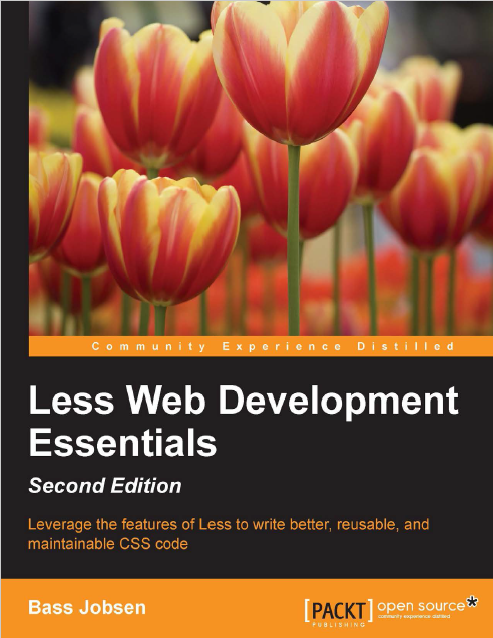
El Libro del Día: Less Web Development Essentials
El Libro del Día: 2015-08-31
Titulo: Less Web Development Essentials
Autor: Bass Jobsen
Editorial: Packt
Nro Paginas: 270
Capítulos:
Chapter 1: Improving Web Development with Less
Chapter 2: Using Variables and Mixins
Chapter 3: Nested Rules, Operations, and Built-in Functions
Chapter 4: Testing Your Code and Using Prebuilt Mixins Libraries
Chapter 5: Integrating Less in Your Own Projects
Chapter 6: Using the Bootstrap 3 Frontend Framework
Chapter 7: Less with External Applications and Frameworks
Descarga:
Less_Web_Development_Essentials
Titulo: Less Web Development Essentials
Autor: Bass Jobsen
Editorial: Packt
Nro Paginas: 270
Capítulos:
Chapter 1: Improving Web Development with Less
Chapter 2: Using Variables and Mixins
Chapter 3: Nested Rules, Operations, and Built-in Functions
Chapter 4: Testing Your Code and Using Prebuilt Mixins Libraries
Chapter 5: Integrating Less in Your Own Projects
Chapter 6: Using the Bootstrap 3 Frontend Framework
Chapter 7: Less with External Applications and Frameworks
Descarga:
Less_Web_Development_Essentials
Etiquetas:
Bass Jobsen,
Bootstrap,
CSS,
Essentials,
Frameworks,
Functions,
Less,
Libraries,
Libros,
Mixins,
Operations,
Packt,
Projects,
Rules,
Testing,
Variables,
Web Development
jueves, 20 de agosto de 2015
El Libro del Día: Mastering jQuery
El Libro del Día: 2015-08-20
Titulo: Mastering jQuery
Autor: Alex Libby
Editorial: Packt
Nro Paginas: 400
Capítulos:
Chapter 1: Installing jQuery
Chapter 2: Customizing jQuery
Chapter 3: Organizing Your Code
Chapter 4: Working with Forms
Chapter 5: Integrating AJAX
Chapter 6: Animating in jQuery
Chapter 7: Advanced Event Handling
Chapter 8: Using jQuery Effects
Chapter 9: Using the Web Performance APIs
Chapter 10: Manipulating Images
Chapter 11: Authoring Advanced Plugins
Chapter 12: Using jQuery with the Node-WebKit Project
Chapter 13: Enhancing Performance in jQuery
Chapter 14: Testing jQuery
Descarga:
Mastering_jQuery
Titulo: Mastering jQuery
Autor: Alex Libby
Editorial: Packt
Nro Paginas: 400
Capítulos:
Chapter 1: Installing jQuery
Chapter 2: Customizing jQuery
Chapter 3: Organizing Your Code
Chapter 4: Working with Forms
Chapter 5: Integrating AJAX
Chapter 6: Animating in jQuery
Chapter 7: Advanced Event Handling
Chapter 8: Using jQuery Effects
Chapter 9: Using the Web Performance APIs
Chapter 10: Manipulating Images
Chapter 11: Authoring Advanced Plugins
Chapter 12: Using jQuery with the Node-WebKit Project
Chapter 13: Enhancing Performance in jQuery
Chapter 14: Testing jQuery
Descarga:
Mastering_jQuery
Etiquetas:
AJAX,
Alex Libby,
Animating,
APIs,
Code,
Customizing,
Effects,
Event Handling,
Forms,
Images,
Installing,
Javascript,
jQuery,
Libros,
Mastering,
Node WebKit,
Packt,
Plugins,
Testing,
Web Performance
viernes, 14 de agosto de 2015
El Libro del Día: Deploying Node.js
El Libro del Día: 2015-08-14
Titulo: Deploying Node.js
Autor: Sandro Pasquali
Editorial: Packt
Nro Paginas: 274
Capítulos:
Chapter 1: Appreciating Node
Chapter 2: Installing and Virtualizing Node Servers
Chapter 3: Scaling Node
Chapter 4: Managing Memory and Space
Chapter 5: Monitoring Applications
Chapter 6: Building and Testing
Chapter 7: Deploying and Maintaining
Descarga:
Deploying_Node.js
Titulo: Deploying Node.js
Autor: Sandro Pasquali
Editorial: Packt
Nro Paginas: 274
Capítulos:
Chapter 1: Appreciating Node
Chapter 2: Installing and Virtualizing Node Servers
Chapter 3: Scaling Node
Chapter 4: Managing Memory and Space
Chapter 5: Monitoring Applications
Chapter 6: Building and Testing
Chapter 7: Deploying and Maintaining
Descarga:
Deploying_Node.js
Etiquetas:
Building,
Deploying,
Installing,
Libros,
Maintaining,
Managing,
Memory,
Monitoring,
Node.js,
Packt,
Sandro Pasquali,
Scaling,
Servers,
Space,
Testing,
Virtualizing
miércoles, 12 de agosto de 2015
El Libro del Día: Ext JS Application Development Blueprints
El Libro del Día: 2015-08-12
Titulo: Ext JS Application Development Blueprints
Autor: Colin Ramsay
Editorial: Packt
Nro Paginas: 341
Capítulos:
Chapter 1: Introduction
Chapter 2: MVC and MVVM
Chapter 3: Application Structure
Chapter 4: Sencha Cmd
Chapter 5: Practical – a CMS Application
Chapter 6: Practical – Monitoring Dashboard
Chapter 7: Practical – an Email Client
Chapter 8: Practical – Questionnaire Component
Chapter 9: A Shopping Application
Chapter 10: Debugging and Performance
Chapter 11: Application Testing
Descarga:
ExtJS_Application_Development_Blueprints
Titulo: Ext JS Application Development Blueprints
Autor: Colin Ramsay
Editorial: Packt
Nro Paginas: 341
Capítulos:
Chapter 1: Introduction
Chapter 2: MVC and MVVM
Chapter 3: Application Structure
Chapter 4: Sencha Cmd
Chapter 5: Practical – a CMS Application
Chapter 6: Practical – Monitoring Dashboard
Chapter 7: Practical – an Email Client
Chapter 8: Practical – Questionnaire Component
Chapter 9: A Shopping Application
Chapter 10: Debugging and Performance
Chapter 11: Application Testing
Descarga:
ExtJS_Application_Development_Blueprints
Etiquetas:
Application,
Blueprints,
CMS,
Colin Ramsay,
Component,
Dashboard,
Debugging,
Development,
Email,
Ext JS,
Libros,
MVC,
MVVM,
Packt,
Performance,
Sencha Cmd,
Shopping App,
Structure,
Testing
viernes, 24 de julio de 2015
El Libro del Día: Practical jQuery
El Libro del Día: 2015-07-24
Titulo: Practical jQuery
Autor: Mukund Chaudhary, Ankur Kumar
Editorial: Apress
Nro Paginas: 305
Capítulos:
Chapter 1: Evolution of jQuery
Chapter 2: Getting Started with jQuery
Chapter 3: Traversing DOM with jQuery
Chapter 4: DOM Manipulation with jQuery
Chapter 5: Events in jQuery
Chapter 6: Real World Events in jQuery
Chapter 7: Animation in jQuery
Chapter 8: Ajax with jQuery
Chapter 9: Creating Plug-ins with jQuery
Chapter 10: Integrating Plug-ins with jQuery
Chapter 11: Using jQuery Frameworks
Chapter 12: Testing jQuery with QUnit
Descarga:
Practical_jQuery
Titulo: Practical jQuery
Autor: Mukund Chaudhary, Ankur Kumar
Editorial: Apress
Nro Paginas: 305
Capítulos:
Chapter 1: Evolution of jQuery
Chapter 2: Getting Started with jQuery
Chapter 3: Traversing DOM with jQuery
Chapter 4: DOM Manipulation with jQuery
Chapter 5: Events in jQuery
Chapter 6: Real World Events in jQuery
Chapter 7: Animation in jQuery
Chapter 8: Ajax with jQuery
Chapter 9: Creating Plug-ins with jQuery
Chapter 10: Integrating Plug-ins with jQuery
Chapter 11: Using jQuery Frameworks
Chapter 12: Testing jQuery with QUnit
Descarga:
Practical_jQuery
Etiquetas:
AJAX,
Animation,
Ankur Kumar,
Apress,
DOM,
Events,
Evolution,
Frameworks,
Javascript,
jQuery,
Libros,
Mukund Chaudhary,
Plug-ins,
Practical,
QUnit,
Testing
martes, 16 de junio de 2015
El Libro del Día: Beginning Node.js
El Libro del Día: 2015-06-16
Titulo: Beginning Node.js
Autor: Basarat Ali Syed
Editorial: Apress
Nro Paginas: 297
Capítulos:
Chapter 1: Setting Up for Node.js Development
Chapter 2: Understanding Node.js
Chapter 3: Core Node.js
Chapter 4: Node.js Packages
Chapter 5: Events and Streams
Chapter 6: Getting Started with HTTP
Chapter 7: Introducing Express
Chapter 8: Persisting Data
Chapter 9: Front-End Basics
Chapter 10: Simplifying Callbacks
Chapter 11: Debugging
Chapter 12: Testing
Chapter 13: Deployment and Scalability
Descarga:
Beginning_Node.js
Titulo: Beginning Node.js
Autor: Basarat Ali Syed
Editorial: Apress
Nro Paginas: 297
Capítulos:
Chapter 1: Setting Up for Node.js Development
Chapter 2: Understanding Node.js
Chapter 3: Core Node.js
Chapter 4: Node.js Packages
Chapter 5: Events and Streams
Chapter 6: Getting Started with HTTP
Chapter 7: Introducing Express
Chapter 8: Persisting Data
Chapter 9: Front-End Basics
Chapter 10: Simplifying Callbacks
Chapter 11: Debugging
Chapter 12: Testing
Chapter 13: Deployment and Scalability
Descarga:
Beginning_Node.js
Etiquetas:
Apress,
Basarat Ali Syed,
Beginning,
CallBacks,
Core,
Data,
Debugging,
Deployment,
Events,
Express,
Front End,
HTTP,
Libros,
Node.js,
Packages,
Persisting,
Scalability,
Setting,
Streams,
Testing
Suscribirse a:
Entradas (Atom)